
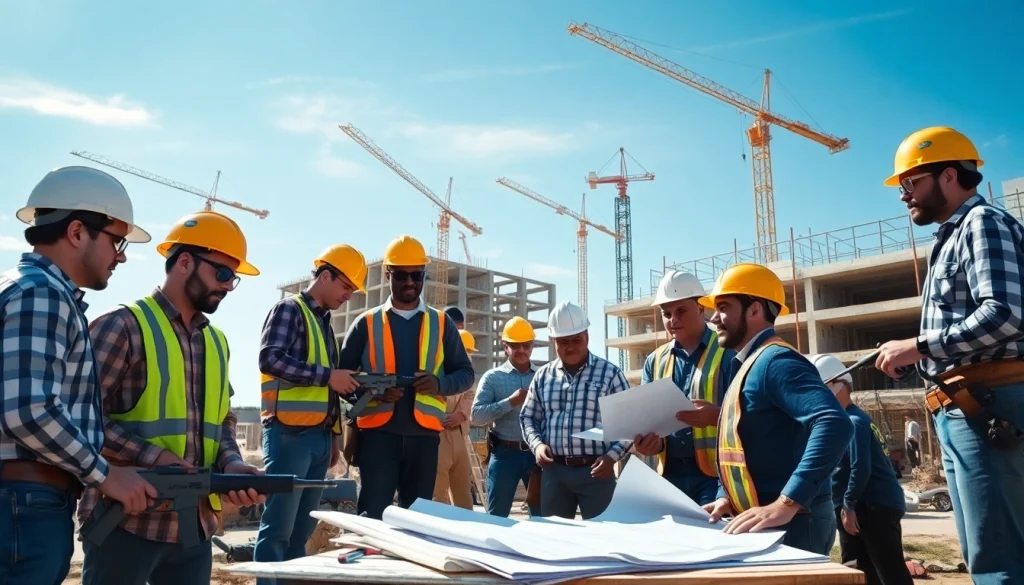
Understanding the Austin Construction Landscape
Austin, Texas, continues to emerge as a vibrant hub for innovation and growth, heavily reflected in its construction landscape. The demand for new residential, commercial, and infrastructural projects has surged, elevating the city’s standing as a key player in the national construction sector. This article delves deep into the dynamics shaping Austin’s construction industry, emphasizing trends, stakeholders, regulatory influences, and more. With such rapid expansion, insights into Austin construction are more critical than ever for developers, architects, and policy-makers.
Current Trends in Austin Construction
As we explore the current trends within the Austin construction market, several key elements stand out. The effects of population growth and urbanization have necessitated the development of mixed-use properties that cater to both residential and commercial needs. Such structures not only accommodate the influx of newcomers but also promote community engagement. Innovative, eco-friendly designs are another defining trend, with developers prioritizing sustainability through energy-efficient buildings and sustainable materials.
Additionally, the advent of remote work has led to a decline in demand for traditional office spaces, becoming more versatile through adaptive reuse of existing structures. These shifts are paving the way for the reimagining of city landscapes.
Key Players in the Local Market
The Austin construction scene is characterized by a mix of local contractors, national firms, and specialized service providers. Prominent construction companies like Rio Construction and J. M. Wilkerson Construction are leading the charge, offering innovative project delivery methods and challenging the traditional dynamics of construction management. Alongside these larger firms, a host of smaller, niche players are capitalizing on areas such as sustainable building and high-tech construction materials.
Moreover, partnerships between public and private sectors have encouraged collaborative projects leading to infrastructural improvements such as roadways and public transport accessibility. These players are essential in navigating the complex regulatory framework that governs construction in the city.
Regulatory Environment and Its Impact
The construction industry in Austin operates under a complex set of regulations that incorporate city ordinances, state laws, and federal guidelines. Key regulatory entities include the City of Austin’s Development Services Department and local zoning boards. These regulations are often designed to promote sustainable development while preserving the character of existing neighborhoods.
However, navigating the regulatory landscape can pose significant challenges. Builders often face delays stemming from permitting processes, zoning changes, and compliance with environmental standards. As such, maintaining a close relationship with local government officials and understanding these regulations is essential for stakeholders to ensure timely project completion and avoid costly setbacks.
Emerging Technologies Shaping Construction in Austin
Innovative Building Materials
The Austin construction industry is at the forefront of utilizing innovative building materials that enhance sustainability and reduce costs. Lightweight concrete, recycled steel, and modular components are gaining traction due to their environment-friendly properties. For instance, cross-laminated timber (CLT) has emerged as a popular alternative to traditional steel, providing structural advantages while being more sustainable.
Additionally, advancements in 3D printing are revolutionizing material procurement in construction. This technology enables the rapid production of building elements, reducing both waste and construction time—a crucial factor in meeting the growing demand in the Austin area.
Utilizing Smart Home Technologies
As technology continues to evolve, smart home technologies are increasingly integrated into new constructions. Builders in Austin are harnessing the power of the Internet of Things (IoT) to create homes equipped with advanced systems for security, lighting, temperature control, and energy management. These features enhance not just convenience but overall energy efficiency, appealing to the eco-conscious buyer.
Furthermore, smart construction technologies, such as Building Information Modeling (BIM), are allowing architects and builders to collaborate more effectively, enabling real-time adjustments and minimizing errors throughout the project lifecycle.
Construction Management Software Advancements
Effective project management has always been crucial in construction, but the growth of sophisticated construction management software has transformed operational efficiencies. Programs that allow for real-time tracking of budgets, schedules, and personnel have become prevalent in Austin’s construction scene. These platforms enable teams to monitor progress against goals, streamline communication, and mitigate risks associated with project delays and budget overruns.
Moreover, cloud-based solutions provide stakeholders with access to data anywhere, facilitating decision-making processes. Integrating construction management software not only helps in enhancing productivity but also fosters transparency and accountability across the project team.
Best Practices for Sustainable Construction
Energy-Efficient Building Techniques
Sustainability is increasingly at the forefront of not only construction preferences but also regulatory mandates. Austin’s building codes are progressively emphasizing energy efficiency, pushing construction firms to adopt techniques such as passive solar design, superior insulation, and energy-efficient HVAC systems. Builders are now utilizing energy modeling software to evaluate different designs, ensuring that they meet or exceed the energy performance benchmarks set by city regulations.
Furthermore, integrating renewable energy systems like solar panels and wind turbines is becoming commonplace in both residential and commercial developments, significantly reducing long-term operational costs.
Recycling and Waste Management in Projects
Construction generates a significant amount of waste, making effective waste management an indispensable part of any sustainable building project. Developers are now prioritizing recycling initiatives, ensuring that materials such as concrete, wood, and metals are repurposed rather than sent to landfills. Moreover, some companies have begun implementing zero-waste strategies, which can reduce overall project costs while positively impacting the environment.
Furthermore, educational programs for workers on efficient waste management practices are integral in fostering a culture of sustainability within the industry.
Benefits of Eco-Friendly Design
Eco-friendly design is not just a trend; it offers numerous benefits. Beyond reducing the environmental impact, such designs can enhance the quality of life for occupants, boost property values, and lower utility bills. For instance, using natural lighting and intelligent ventilation strategies can provide healthier living conditions and improve comfort.
Eco-friendly properties often attract environmentally aware buyers and tenants looking for sustainable lifestyles, providing builders with a competitive edge in the market.
Challenges Facing Austin Construction Companies
Labor Shortages and Workforce Training
The construction industry in Austin is currently grappling with a significant labor shortage. As demand for construction services grows, many firms are struggling to find skilled labor. A lack of training programs and vocational education options can exacerbate this issue, leading to an increased reliance on temporary or less experienced workers, which can impact project quality.
Industry players must prioritize workforce development through partnerships with local educational institutions and trades programs, thereby nurturing a skilled workforce prepared to meet the construction demands of tomorrow.
Supply Chain Disruptions and Solutions
Many construction projects rely on a nuanced supply chain for materials and equipment, and recent global events have highlighted vulnerabilities in these systems. Disruptions can significantly delay projects and inflate costs. To mitigate these risks, construction firms in Austin are proactively seeking alternative suppliers and maintaining greater inventory on hand to ensure project timelines remain intact.
Utilizing advanced data analytics to monitor supply chain performance and create predictive models can also help in identifying potential risks before they materialize, ultimately fostering greater resiliency.
Maintaining Quality Amidst Growth
As the construction industry in Austin continues to expand rapidly, maintaining quality can sometimes take a backseat to achieving deadlines. Companies need to establish robust quality control processes to ensure that all work meets set standards, thus safeguarding their reputations and minimizing liabilities.
Implementing best practices such as regular inspections, employing quality assurance personnel, and leveraging technology for oversight can help ensure that construction quality is not compromised even amidst rapid growth.
The Future of Austin Construction: Predictions and Strategies
Market Forecast and Growth Opportunities
The construction market in Austin is predicted to experience robust growth over the coming years, driven by continued population influx and urban development. Industries such as technology and creative arts are expected to attract further investment, leading to an uptick in residential and commercial projects.
Growth opportunities are particularly ripe in sectors catering to sustainability and green technologies, pointing to a future where developers can flourish by integrating environmentally friendly practices into their operations. By aligning with these emerging trends, firms can pursue innovative designs that respond to consumer preferences while minimizing ecological footprints.
Investment Zones: Where to Build Next
As the Austin skyline continues to evolve, particular investment zones are surfacing as popular locations for future construction endeavors. Areas such as East Austin and South Congress are witnessing significant revitalization, prompting interest from developers. Additionally, the city is incentivizing developments in up-and-coming neighborhoods by providing tax abatements and streamlined permitting processes, making it crucial for construction firms to keep an eye on these targeted locales.
The city’s infrastructure improvements and expansion of public transport links are also guiding new construction strategies, ensuring that developments are connected and accessible.
Long-Term Trends to Watch
In the long term, the integration of advanced technologies is expected to transform how construction projects are designed, executed, and maintained. The rise of virtual and augmented reality is already changing design phases, allowing clients to visualize projects before the groundwork begins. Similarly, AI and machine learning applications are streamlining various processes, from planning to project scheduling.
Additionally, societal shifts towards remote work and hybrid models will shape the kinds of commercial spaces that will emerge, subsequently influencing how these spaces are arranged and designed. Adapting to these long-term trends will be essential for construction companies in navigating the future landscape of Austin’s booming construction market.