

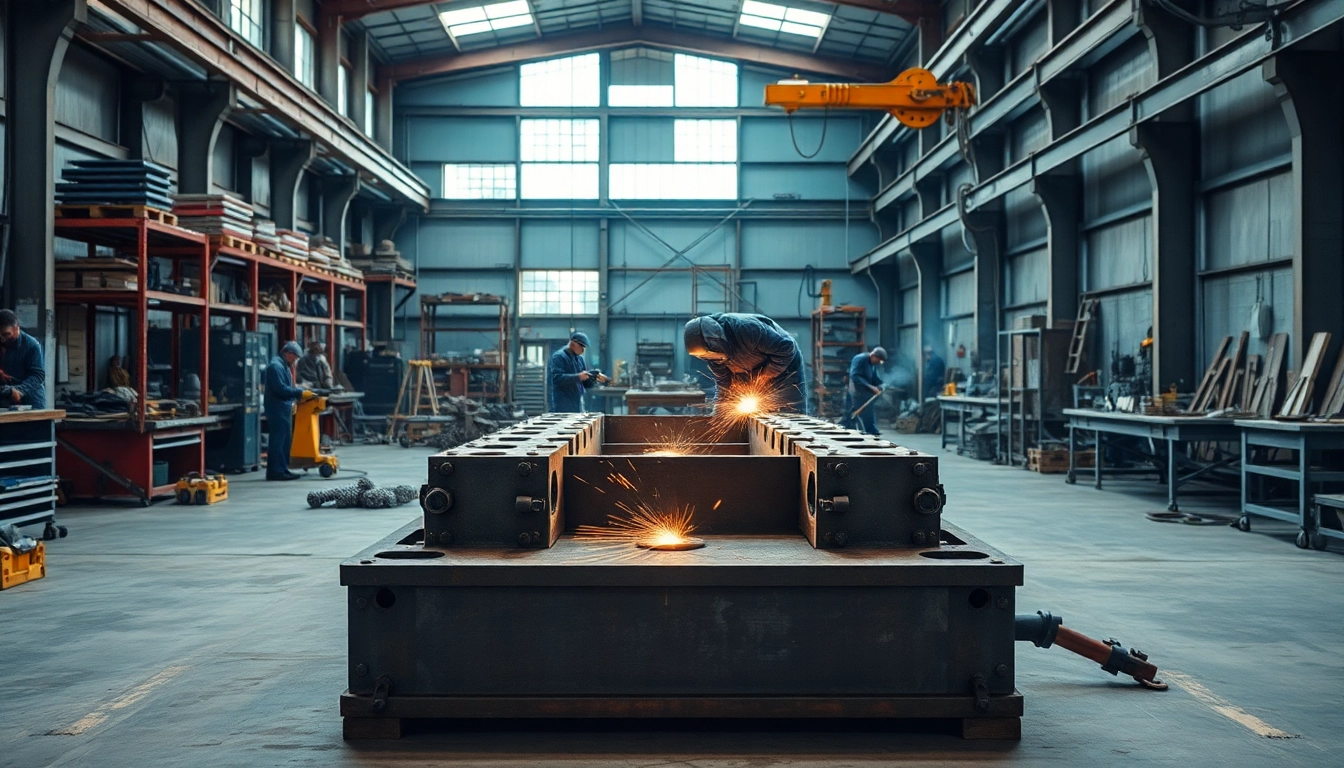
Understanding Custom Steel Fabrication
What is Custom Steel Fabrication?
Custom steel fabrication refers to the process of designing and manufacturing steel structures and components tailored to specific requirements or applications. Unlike standard fabrication that produces uniform products, custom fabrication involves a unique design process, allowing for flexibility and adaptability in various industries. This can encompass a wide range of activities, from cutting and bending to welding and finishing.
The demand for custom steel fabrication has surged in recent years, driven by increased construction activity, innovation in design, and the specific needs of modern architecture. It involves a thorough understanding of materials, techniques, and end-use requirements to create high-quality, durable products. Consequently, it has become integral to many sectors including construction, manufacturing, and infrastructure.
Key Benefits of Custom Steel Fabrication
Opting for custom steel fabrication offers various advantages, including:
- Tailored Solutions: Custom fabrication allows for designs that meet exact specifications, ensuring efficiency and functionality.
- Material Efficiency: By precisely cutting materials to fit, waste is minimized, which can lead to cost savings and sustainability.
- Quality Control: Given the bespoke nature of custom projects, manufacturers can maintain strict quality control over every aspect of the fabrication process.
- Versatility: Custom fabrication can accommodate a variety of materials and styles, making it suitable for a wide range of applications.
- Enhanced Aesthetic Appeal: Custom designs can enhance the visual appeal of structures, aligning with modern architectural trends.
Common Applications in Various Industries
Custom steel fabrication finds applications across multiple industries, each with unique requirements:
- Construction: From steel beams and frames to staircases and railings, custom fabrication is essential in creating the backbone of modern buildings.
- Aerospace: Custom components are crucial for aircraft manufacturing, where precision and safety are paramount.
- Automotive: Custom parts created for vehicles can improve performance and safety while allowing for designer innovations.
- Energy: Fabrication activities contribute to the energy sector, including wind turbines and pipelines that require robust materials and specialized designs.
- Food Processing: Custom steel equipment is necessary for hygiene and efficiency in food production and processing environments.
Choosing the Right Fabrication Partner
Factors to Consider When Selecting a Fabrication Company
Identifying the right custom steel fabrication partner is crucial for project success. Here are some factors to evaluate:
- Experience and Expertise: Look for a company with a proven track record in your specific industry to ensure they understand unique requirements.
- Quality Assurance Measures: Investigate their quality control processes to ensure they meet industry standards and regulations.
- Technical Capabilities: Assess whether they possess the necessary technology and skills for advanced fabrication techniques.
- Communication Skills: Clear communication is essential for collaboration, ensuring that all project requirements are understood and executed.
- Reputation: Seek reviews and testimonials from previous clients to gauge the company’s reliability and professionalism.
Questions to Ask Before Collaboration
Before entering into an agreement with a fabrication partner, it’s critical to ask the right questions:
- What previous projects have you completed that are similar to mine?
- Can you provide references or case studies?
- What is your process for quality control?
- How do you handle changes in project scope?
- What is your estimated timeline for project completion?
Understanding Quotes and Pricing Structures
Understanding quotes is key to ensuring that you are receiving fair pricing for custom steel fabrication work. Here are the elements that should be considered:
- Material Costs: The type of steel used can significantly impact the overall cost. Specialized materials may incur higher fees.
- Labor Costs: Depending on the complexity of the project, labor can account for a substantial portion of the quote.
- Overhead Costs: This includes operational expenses and overhead that the fabricator incurs in completing the job.
- Lead Times: Projects requiring quick turnaround times may incur additional rush fees.
- Finishing Options: Costs can increase depending on the types of finishes and treatments required for the final product.
Processes in Custom Steel Fabrication
Overview of Fabrication Techniques
Custom steel fabrication encompasses a variety of techniques that are strategically employed, depending on the project specifications. These techniques include:
- Cutting: Techniques such as laser cutting, plasma cutting, and waterjet cutting are employed to achieve precise dimensions.
- Bending: Bending processes help form steel into required angles or shapes using methods like press braking and roll bending.
- Welding: Various welding techniques, depending on material types and thicknesses, are applicable in joining components effectively.
- Assembling: This entails the assembly of various fabricated parts into a final product, ensuring they fit correctly and function as intended.
Welding Types and Their Applications
Welding is a critical aspect of the fabrication process, impacting the strength, durability, and longevity of steel structures. Common types of welding techniques include:
- MIG Welding (Metal Inert Gas): Ideal for thin materials and offers a strong, clean weld. It is versatile and easy to learn.
- TIG Welding (Tungsten Inert Gas): Suitable for precision work on thinner metals, providing superior quality welds.
- Stick Welding (Shielded Metal Arc Welding): Commonly used for structural steel, it’s efficient in outdoor conditions.
- Submerged Arc Welding: Used primarily for larger scale projects and offers high weld quality and speed.
- Flux-Cored Arc Welding: Similar to MIG but uses a tubular wire filled with flux, making it suitable for outdoor work.
Finishing Touches: Coating and Treatment Options
Finishing processes in custom steel fabrication are crucial for enhancing durability and corrosion resistance. Common treatments include:
- Galvanization: This involves coating steel with zinc to protect it from corrosion and rust.
- Painting: Protective paint coatings improve aesthetic appeal and add an additional layer of protection.
- Powder Coating: A dry finishing process that provides a durable and corrosive-resistant finish.
- Passivation: Enhances the corrosion resistance of stainless steel by removing free iron and other surface contaminants.
Innovations in Custom Steel Fabrication
Emerging Technologies and Trends
The field of custom steel fabrication is evolving with technological advancements. Key innovations include:
- Additive Manufacturing: Also known as 3D printing, this technology is changing how metal parts are produced, allowing for complex designs that were previously impossible.
- Robotics: The use of robotic arms in fabrication processes increases precision and efficiency, particularly in welding and assembly.
- Computer Numerical Control (CNC) Machines: These machines automate processes, ensuring high levels of accuracy and repeatability in parts production.
- Advanced Software: Software tools for modeling and simulation help in planning and optimizing fabrication processes before they commence.
Sustainable Practices in Steel Fabrication
As industries pivot towards sustainability, steel fabrication is also evolving. Sustainable practices include:
- Recyclability: Steel is one of the most recycled materials globally. Many fabricators prioritize using recycled steel in their operations.
- Energy Efficiency: Utilizing advanced machinery and processes leads to reduced energy consumption throughout the fabrication cycle.
- Waste Reduction: Implementing lean manufacturing principles helps reduce scrap and waste, making operations more efficient.
- Eco-friendly Coatings: Using environmentally safe coatings minimizes the ecological footprint of fabrication activities.
Case Studies: Successful Projects
Highlighting successful projects can provide insight into the capabilities of custom steel fabrication:
- High-Rise Building Structure: A fabrication company was contracted to produce the steel framework for a 50-story skyscraper, showcasing modular design and efficiency.
- Custom Machinery Development: A manufacturing firm sought custom steel parts for a unique machine that significantly improved production efficiency.
- Bridge Construction: Custom fabricated steel components were used in the renovation of a landmark bridge, showcasing the balance between modern engineering and lasting design.
Measuring Success in Custom Steel Fabrication
Defining Quality Metrics and Standards
Measuring success in custom steel fabrication involves defining clear quality metrics. These may include:
- Dimensional Accuracy: Evaluating how closely the fabricated components meet the specified dimensions.
- Weld Quality: Assessing the integrity of welds through non-destructive testing methods.
- Material Properties: Ensuring that the finished products exhibit the required mechanical properties as per industry standards.
- Compliance with Regulations: Adhering to relevant industry and safety regulations throughout the fabrication process.
Evaluating Project Completeness and Client Satisfaction
Once a fabrication project is completed, evaluating its success extends beyond just meeting specifications. It involves:
- Feedback from Clients: Gathering client input regarding the final product and their overall experience throughout the project.
- Performance Analysis: Analyzing how well the fabricated components perform in real-world applications.
- Post-Project Support: Assessing the responsiveness and reliability of the fabricator in offering after-sale support and maintenance options.
Future Trends and Challenges in the Industry
As custom steel fabrication continues to evolve, several challenges and trends emerge:
- Labor Shortages: Finding skilled workers remains a significant challenge in the steel fabrication industry, necessitating training programs.
- Technological Integration: Staying abreast of emerging technologies and integrating them into existing processes is essential for remaining competitive.
- Sustainability Pressures: Meeting growing demands for eco-friendly practices will shape future business operations.
- Global Competition: With more players entering the market, differentiating services and quality is vital for success.